Post by SpaceWolf on 2025-06-25 21:30:48
For me, the most important part of level/setting design is environmental storytelling. As I'm exploring, I want the things around me - whether great or small - to inform the 'backstory' of a given area relative to our perspective as players.
Let's use Metroid as an example:
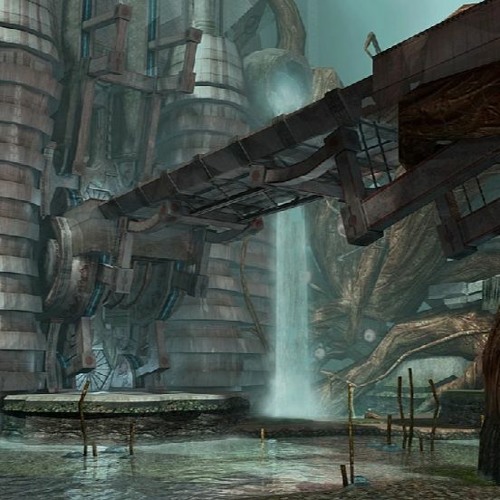
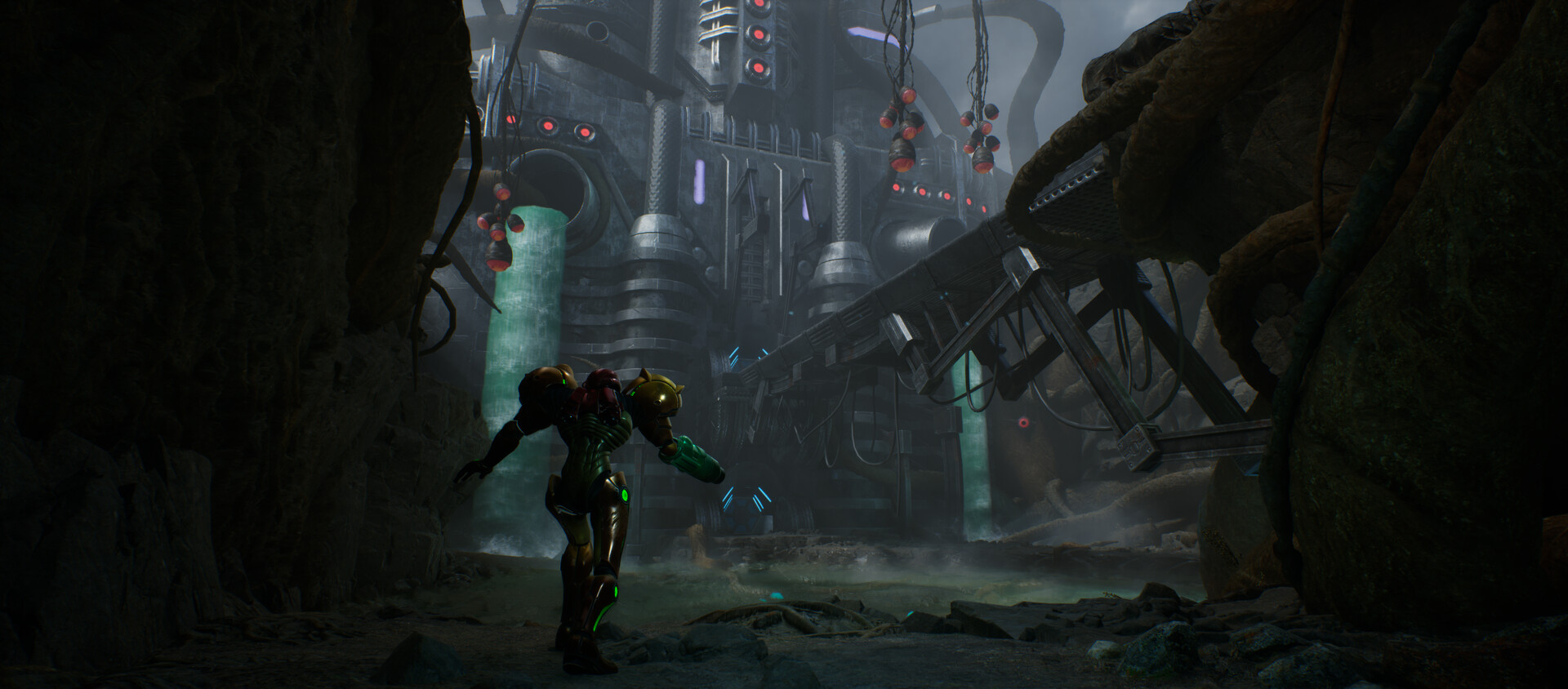
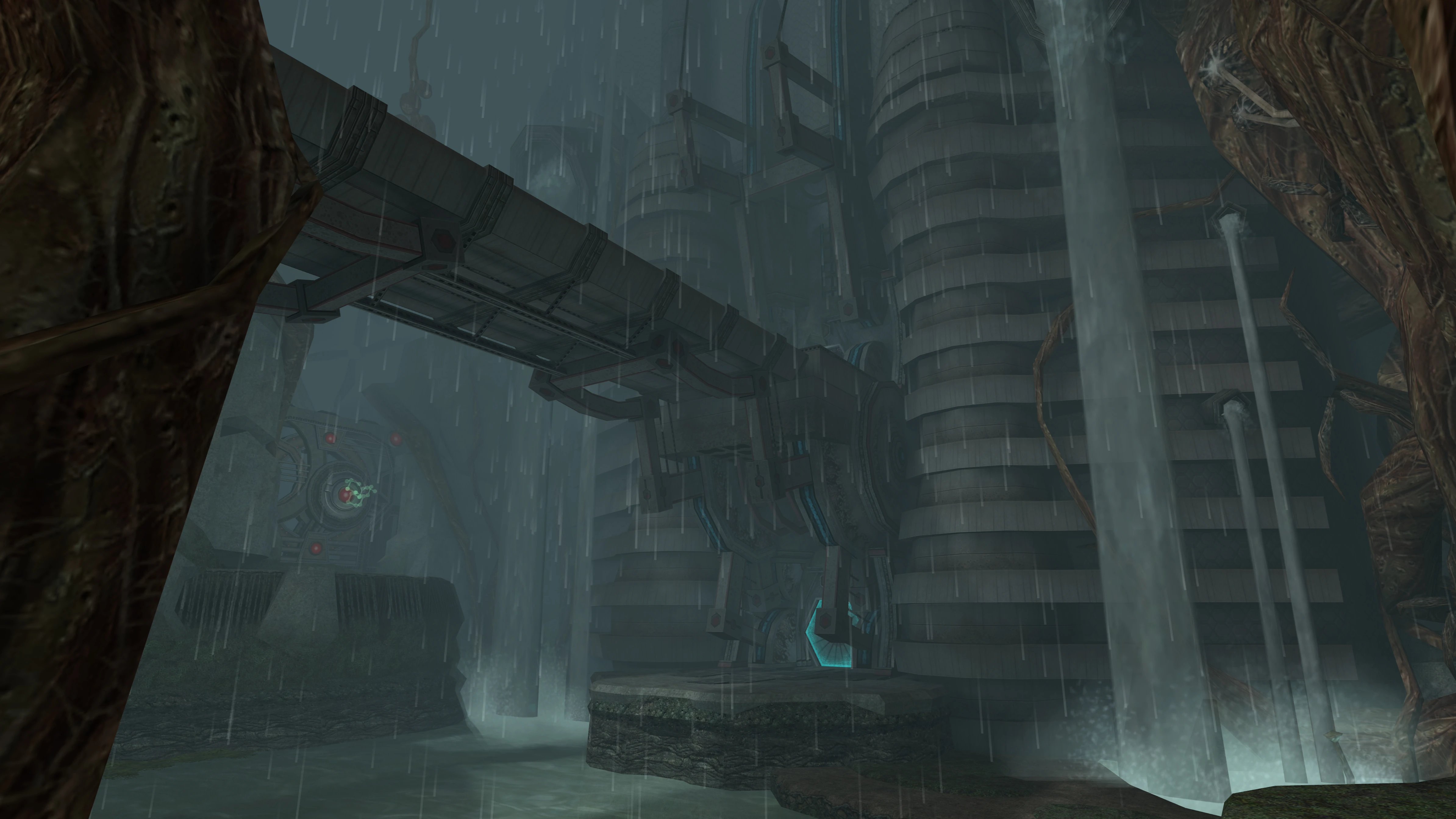
https://static.wikia.nocookie.net/metroid/images/1/1e/Torvus_Bog.jpg/revision/latest?cb=20230521011448
The first two are some art for an area in Metroid Prime 2 - the third is an actual ingame screenshot of the same space, which the image share function didn't want to directly post. Figured I'd add all three since the perspective in each is a bit different.
The idea here is that this was once an industrial facility in a forested area, but the region was rapidly flooded after some drastic environmental shifts (a meteor impact about 50 years prior). By the time you explore it, the civilization who lived here has largely abandoned the area, leaving nature to slowly reclaim it.
Metroid Prime 2 is full of environmental storytelling like this - an area that was once verdant plains got scorched into a desert from the same meteor, there's ruined structures all around, and all in all you can feel the story-beats of the area without anyone needing to tell you anything.
The Metroid Prime series (particularly the first two games) rely on this type of environmental storytelling a lot. There's a lot of written lore you can find throughout its biomes, mind you, but all of it aligns with what you're already seeing all around you. Whether it's ancient lore from when a given area was inhabited, or more recent stuff detailing what led to things being abandoned, it all adds to the total picture.
For an engaging environment, I think it's important to think of the story of a given area first and then build your features AROUND that. Give players a sense of what happened, show them enough that they can extrapolate and theorize and make conjectures - and then have the deeper lore available for those who want to look.
The ruined structures in that artwork are a good example of "big dramatic features" I suppose, but the entire AREA they're in informs that "this was once a forest but now it's a flash-flooded bog"; there's evidence that the environment is still adapting to the new water levels everywhere. The cohesiveness is what matters the most.
As for biome-specific gameplay stuff - it's fine to let that just be emergent, in my opinion. For example, in the flooded forest, it's hard to move around and navigate a lot of the time simply because a lot of the places you can go are knee or waist-deep, lol. Finding equipment and other means to navigate the area more smoothly is as much of a challenge as hostile wildlife, since the whole area's going through some very rapid changes (on the environmental timescale, anyway). I would say, let biome-specific gameplay be emergent from all the other parts of an area rather than trying very hard to build an area around a specific gameplay mechanic. Worlds and environments are emergent things, and the difficulties we, as living things, have with them are emergent too.
Let's use Metroid as an example:
https://static.wikia.nocookie.net/metroid/images/1/1e/Torvus_Bog.jpg/revision/latest?cb=20230521011448
The first two are some art for an area in Metroid Prime 2 - the third is an actual ingame screenshot of the same space, which the image share function didn't want to directly post. Figured I'd add all three since the perspective in each is a bit different.
The idea here is that this was once an industrial facility in a forested area, but the region was rapidly flooded after some drastic environmental shifts (a meteor impact about 50 years prior). By the time you explore it, the civilization who lived here has largely abandoned the area, leaving nature to slowly reclaim it.
Metroid Prime 2 is full of environmental storytelling like this - an area that was once verdant plains got scorched into a desert from the same meteor, there's ruined structures all around, and all in all you can feel the story-beats of the area without anyone needing to tell you anything.
The Metroid Prime series (particularly the first two games) rely on this type of environmental storytelling a lot. There's a lot of written lore you can find throughout its biomes, mind you, but all of it aligns with what you're already seeing all around you. Whether it's ancient lore from when a given area was inhabited, or more recent stuff detailing what led to things being abandoned, it all adds to the total picture.
For an engaging environment, I think it's important to think of the story of a given area first and then build your features AROUND that. Give players a sense of what happened, show them enough that they can extrapolate and theorize and make conjectures - and then have the deeper lore available for those who want to look.
The ruined structures in that artwork are a good example of "big dramatic features" I suppose, but the entire AREA they're in informs that "this was once a forest but now it's a flash-flooded bog"; there's evidence that the environment is still adapting to the new water levels everywhere. The cohesiveness is what matters the most.
As for biome-specific gameplay stuff - it's fine to let that just be emergent, in my opinion. For example, in the flooded forest, it's hard to move around and navigate a lot of the time simply because a lot of the places you can go are knee or waist-deep, lol. Finding equipment and other means to navigate the area more smoothly is as much of a challenge as hostile wildlife, since the whole area's going through some very rapid changes (on the environmental timescale, anyway). I would say, let biome-specific gameplay be emergent from all the other parts of an area rather than trying very hard to build an area around a specific gameplay mechanic. Worlds and environments are emergent things, and the difficulties we, as living things, have with them are emergent too.


 https://www.youtube.com/watch?v=dZ9RU7pznTs


 https://youtube.com/watch?v=Wlzc_yWIXR8
 https://youtube.com/watch?v=hm_zg9KxDBw